|
|||
| | home | bio | maps | travel | weather | | |||
| P.O.Box 774, KemPTville, Ontario, Canada KOG 1J0 | |||
| Tel. (613) 258-2893 Fax. (613) 258-0015 email:| Glen Kealey @ Sympatico in Canada | |
|||

 .
.
|
|||
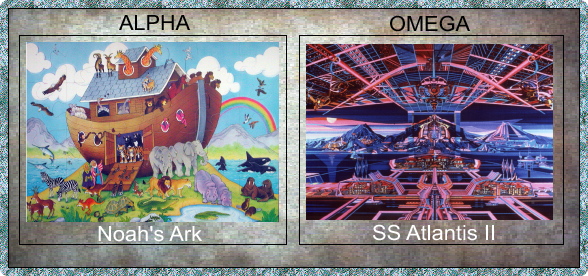
|
|||

|
|
|
|
|||
| | home | bio | maps | travel | weather | | |||
| P.O.Box 774, KemPTville, Ontario, Canada KOG 1J0 | |||
| Tel. (613) 258-2893 Fax. (613) 258-0015 email:| Glen Kealey @ Sympatico in Canada | |
|||
|
.
|
|||
|
|
|||
|
|
|
| April, 2005 "What's this world coming to?" |
| ** TOTAL VISITORS TO DATE : 71593 ** |
PAPA TROLLS WITH TYROLLEAN BIRDMEN
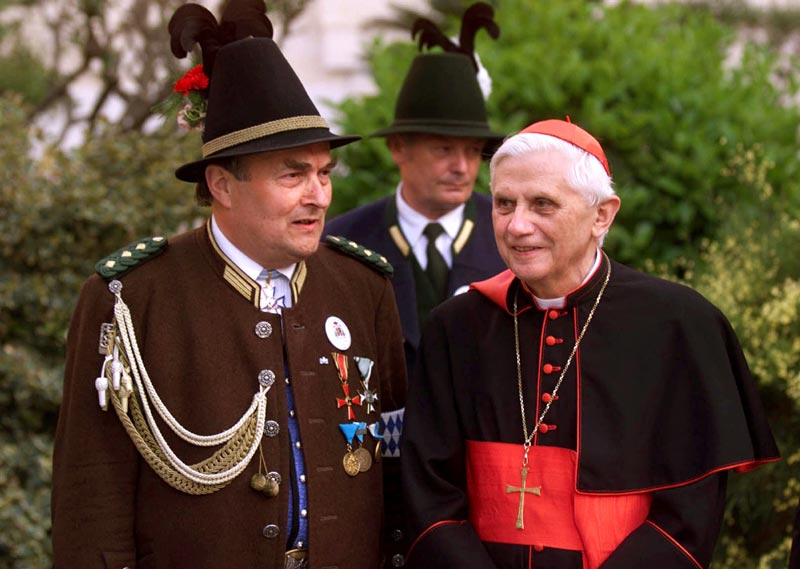
The SculPTor
April 20, 2005
WALT DISNEY ENTERPRISES
Willow Bay
Benedict of Nursia, Saint. A.D.480-547. Italian monk who as founder of the
Benedictine order (c. 529) is considered the patriarch of Western monasticism.
BENEDICT OF NURSIA : In 1964 Pope Paul VI proclaimed Benedict patron saint
of all Europe. Although honored as the "father of western monasticism,"
Benedict founded no monastic orders. But his rule for governing monastic life came
to be adopted by ever larger numbers of monasteries in Europe after the 7th century.
His rule was a kind of constitution that provided complete guidance for the government
of a monastery in its spiritual and material well-being. The rule promoted the ideals
of moderation and cooperation in the religious community, and it demanded poverty,
obedience, chastity, and fidelity from those who chose the religious life.
The earliest authoritative account of Benedict's life is found in the 'Dialogues'
of Pope Gregory I, who was pope from 590 to 604. It was written more than 40 years
after Benedict's death. Gregory obtained most of his information for 'Dialogues'
from four of Benedict's disciples. The evidence indicates that Benedict was born
at Nursia, Italy, in about 480; that he studied in Rome, where he came under the
influence of monastic orders from the Byzantine Empire; and that he turned to monasticism
as a way of getting away from the evils of Rome.
He retired near Subiaco, 40 miles (65 kilometers) east of Rome, and lived in a cave
there for several years. When his reputation as a holy man spread, disciples came
to him and pleaded with him to found a monastery. His reforming efforts were resisted,
however, and an attempt was made to poison him. He returned to the troglodyte's cave,
but disciples continued to flock to him.
He founded 12 monasteries in the vicinity of Subiaco, and after a few years started
the great abbey at Monte Cassino, south of Rome. Benedict's sister, Scholastica,
lived near Monte Cassino as head of a nunnery. When Benedict died, he was buried
in the abbey's Oratory of the beheaded St. John the Baptist.
St. Benedict's death was recorded by monks on March 21, which became the traditional
day of his death. The Roman Catholic church in Europe has set aside July 11 as his
feast day.
Subiaco, Italy, town about 30 mi (50 km) e. of Rome; relics of Nero; monastery and
convent; marble quarries; manufactures paper and macaroni.
SEESAW : Chronicles of Narnia
The SculPTor
April 20, 2005
STANDARD 123 NATSIS
The first division of NATSIS are the braindead Ecclesiastic Freemasons
of the ISTAN countries of Central Asia who follow orders from the BRAHMIN of India,
the O.range BUDDHISTS of Thibet and/or the dumbed down syndrom MONGOLOIDS of Mongolia.
The second division of NATSIS are the braindead Secular ILLUMINATSIS
of Hungary, Poland and Bavaria (Austria and Germany).
The third division of NATSIS are the braindead bisexual BOHEMIAN Bishops
of the Czech Republic and Canada, the penultimate "PROMISED LAND".
The SculPTor
April 20, 2005
BEWARE THE SILENT "T" and ............................
Read His Lips
DOUBLE U . COME
UNITARIAN UNIVERSALIST ASSOCIATION. In 1961 two religious groups in the United
States merged to form the American Unitarian Universalist Association. Of the two,
the Unitarians appeared earlier, having their roots in Europe's 16th-century Reformation.
The Universalists were first established in the United States in 1779 by a former
English Methodist, John Murray.
Both Unitarianism and Universalism are based on ideas that originated early in the
history of Christianity. The chief Unitarian doctrine is, as the name indicates,
the unity or oneness of God. In the 4th century Arias, a priest from Alexandria,
Egypt, taught that Jesus was a man chosen by God but in no sense a deity himself.
This teaching was condemned as heresy by most Christian theologians of the time,
but it persisted and emerged again during the 16th century.
Some liberal followers of the Reformers Martin Luther and John Calvin taught the
unity of God. Persecuted by the major Reformation churches and by the Roman Catholic
church as well, some of these followers took refuge in Poland. There a Unitarian
group called the Minor Reformed church was formed in 1565. After 1579 the group was
led by the Italian exile Faustus Socinus, who formulated the basic teachings of the
denomination. The Polish Unitarians were persecuted and driven into exile by the
Counter-Reformation in the 16th century.
Unitarianism became established in Hungary in the late 1500s and in
the British Isles in the early 1600s. In the United States it arose as a reaction
against the emotionalism of the Great Awakening of the mid-18th century (see Revivalism).
One of its influential founders was Charles Chauncy, minister of First Church in
Boston, Mass., for 60 years. Other powerful influences were William Ellery Channing
and Ralph Waldo Emerson.
Universalism's roots are in the teachings of the 3rd-century Christian
theologian Origen, who taught at Alexandria. He denied everlasting punishment for
unbelievers. He taught instead that the whole universe will be restored to God at
the end of time. This doctrine also persisted as a minor strain in Christianity,
though it was condemned by the major denominations. It had no influence in North
America, however, until it was first preached by George de Benneville, Elhanan Winchester,
and John Murray. Their preaching, like Charles Chauncy's, was a reaction against
18th-century revivalism and its preaching of everlasting punishment for unbelievers.
Universalist teaching was shaped by Hosea Ballou, a former Baptist, in his 'A Treatise
on Atonement' (1805), 'An Examination of the
Doctrine of Future Retribution' (1834), and other writings.
There is no official statement of belief for Unitarians and Universalists. Each congregation
is independent, though it is a member of the association. Some congregations maintain
beliefs and rituals based on the Bible, while others emphasize human social improvement
and scientific progress. Reportedly, all members are devoted to individual freedom,
reason, and tolerance.
SEESAW
In the early Christian era Alexandria enjoyed its prominence in the Roman world as
a center of Christianity. Tradition says that St. Mark introduced the new religion
there from AD 45 to 62. Many Christian men moved to the desert to live as hermits.
Later these men joined together to form powerful monastic communities. Theological
ferment produced the orthodoxy of Athanasius, the heresy of Arius, and the
Gnosticism of Valentinus. Bishops throughout a wide region answered to the
patriarchs of Alexandria.
By 323 Constantine had brought the entire Roman world under his own rule. At that
time a quarrel threatened to split the Christian church into two camps. Arius, a
priest of Alexandria, Egypt, maintained that Christ was not the equal of the Father
but was created by Him.
Athanasius, leader of the bishops in the West, claimed that the Father and
Son, though distinct, were equal, and of the same substance. To settle the matter,
Constantine called together an ecumenical, or worldwide, council of bishops at Nicaea,
in Asia Minor, in 325. He himself ran the meeting. An overwhelming majority condemned
the Arian view as heresy. The Council drew up the Nicene Creed, which is still accepted
as the basic doctrine of most Christian churches.
Arius (250-336), Christian priest of Alexandria, Egypt, whose teachings gave
rise to a theological doctrine known as Arianism.
Arianism, doctrine proposed by the Persian priest Arius, repudiated by early
Christian church as heresy, that the 3 in 1 human Son (Semites-Asians-Caucasians)
is finite and was created by the Father (the pre-Ice Age Neanderthal/Cro-Magnons).
The holy G.Host symbol is itself Mary, the Virgin Mother delivered to angels by the
Mason Joseph, ie: a symbol for cloning Ubermensch, the coming new world order surrogate
mother (an androgyny male hermaphrodite SuperSlave; the penultimate product of Francis
Bacon's "College of Six Days" before "The next Cleansing").
Eusebius of Nicomedia (called the Great) (died AD 341), leading defender of
Arius, and after death of Arius leader of his party; a politician rather than a theologian;
banished from his see; pardoned through sister of Constantine; promoted to bishop
of Nicomedia and later of Constantinople. (A media man called SUE from INCO).
The SculPTor
April 20, 2005
TOP GERMAN FREEMASON ILLUMINATSI ELECTED POPE
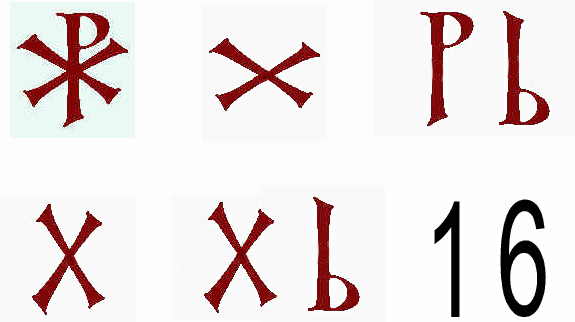
Edgar Allan POE couldn't have said it any better.
RAT.Z.INGER Jose.ph has been elected pope.
His name suggests "THE WAY"; the Alpha and the Omega (the beginning and
the end) and a REVERSAL of direction.
JOE has also chosen the name BENEDICT XVI (as in BENEDICT ARNOLD, the traitor).
And the number 16, (the cross and sword of Constantine and the mark of BAPHOMET).
Benedict is the SON of the EDICT (ICE).
Europe and America had better get canoes to ride out the flood or the lava of volCANOES.
The SculPTor
April 19, 2005
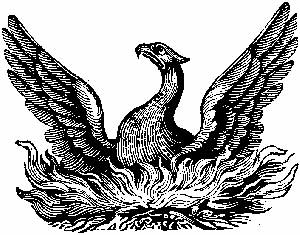
THE K2 PHOENIX
In ancient Egypt and in classical antiquity, the phoenix was a fabulous bird associated
with the worship of the son (Asia). The phoenix was said to be as large
as an eagle, pheasant, turkey or vulture, with brilliant scarlet and gold plumage
and a melodious cry.
Only one phoenix existed at any one time, and it was very long-lived--no ancient
writer gave it a life span of less than 500 years. As its death approached, the phoenix
fashioned a nest of aromatic boughs and spices, set it on fire, and was consumed
in the flames.
From the pyre miraculously sprang a new phoenix, which, after embalming its predecessor's
ashes (DNA) in a Soma egg of myrrh, flew with the ashes to the City of the Sun, in
Egypt, where it deposited them on the altar in the temple of the Egyptian god of
the sun.
The phoenix was understandably thus associated with immortality and the allegory
of resurrection and life after death. The phoenix was compared to the undying Romany
(Cro-Magnon, Gypsies), and it appears on the coinage of the Holy Roman Empire as
a symbol of ROME, (and Valhalla the Eternal City, in the Moho heavenly realm
of Asgard).
The SculPTor
April 19, 2005
Birdmen's O.range Lava Mystery Religions
FREEMASONRY IS ASIAN PHOENIX'
"BORN-AGAIN BUDDHISM"
In the Greek city-states, cults centering around the worship of a particular Eastern
"Romany" god developed very early. Some were local in scope, but after
Greece was absorbed into the "Roman Empire" many of these cults spread
throughout the Mediterranean world and attracted large followings. In time some of
the lesser gods and goddesses of the Middle East and Egypt also had cults built around
them. The Indu-Persian Eastern mystery (volcano) religions, or mysteries, reached
their peak in the first three centuries AD. After that time Christianity became the
dominant religion of the Western (Holy Roman) empire, and the Arian mysteries of
Arius became known as Ecclesiastic, and then in 1717, as Secular Freemasonry.
One of the most widespread of the cults in pre-Roman Greece was devoted to Dionysus.
Because he was the god of wine (see volcanoes, lava and vineyards), his festivals
were lively affairs that offered the chance to put aside temporarily the daily routines
of life and get caught up in wild celebrations. In many cases only those who had
been initiated into the cult could participate in the festivities.
The most famous of the secret religious rites of ancient Greece were the Eleusinian
mysteries. They were originally confined to the city of Eleusis, about a day's journey
from Athens. In the ritual the search by the earth goddess Demeter for her abducted
daughter Persephone's uterus or womb was reenacted. The ritual symbolized the grain
(eggs) being buried in the soil and growing again to be made into bread. It also
carried the message that out of every grave a new life grows (see DNA and Genetic
Engineering), and thus it promoted a message of the hope for immortality through
symbolism that was very close to the Christian idea of resurrection.
The Orphic mysteries got their name from Orpheus, the Greek hero endowed with superhuman
musical skills. (See Muses) According to legend he was the author of a body of writings
called the Orphic rhapsodies, which dealt with purification from sin and the afterlife.
Cult members believed that the human soul was divine, and it was the believer's task
to liberate it from the body. This could be achieved by abstaining from meat, wine,
and sex with women. The soul would come to judgment after death. If the person had
lived properly, the soul would be sent to a paradise called Elysium (Moho). If not,
it would be punished and sent to hell (be recycled). After either the reward of Elysium
(PO) or the punishment of hell (HUN), the soul (DNA) would eventually return to Earth
in another body (See Buddhism). This cycle of birth and death had to be repeated
three times (Semites, Asians and Caucasians) before the soul was finally released
from the cycle. (via Ubermensch)
In all of the mysteries candidates for initiation took an oath of secrecy. They then
confessed--in the presence of the community of believers--all the faults of their
lives up to that point (See blackmail, ie: Confession). After this a rite of baptism
was performed, which washed away the candidate's sins (The "AB" solution).
The initiation ceremonies symbolized death and resurrection, and they were usually
quite extravagant. In some cults the initiates were enclosed in a tomb and released.
In others (Christian baptism) they were symbolically drowned or otherwise put to
death.
The cults, such as those of Demeter and Dionysus, had seasonal festivals based on
the sowing and reaping of grain (peepul) or the production of wine. The festivals
of the Isis cult were connected with the three Egyptian seasons and with the cycle
of the Nile River--flooding, sowing, and reaping. In the religion of the sun-god
the festival was determined by astronomy (Zodiac). The greatest celebration was on
December 24-25-26 in connection with the winter solstice. The lengthening of days
afterward symbolized the rebirth of the god and the renewal of life. Christianity
eventually replaced this festival with Christmas (See surrogate mother--Mary, not
Marry-- and AI).
In some of the mysteries there was a tendency to monotheism--belief in one god. Isis,
for example, was held to be the (effeminate) essence of all goddesses; and Sarapis,
originally an Egyptian sun-god, was a name uniting the gods into one. (See 2 in 1)
In the religion of the dualist sun-god, a doctrine was developed to show that all
gods were only names for the one god, Sol. SEESAW IO (Ten) UBERMENSCH, "Al"
The SculPTor
April 19, 2005
THE GREAT WAL*MART OF CHINA
More villain than victim
By Joe Hansen
As America's largest company, with more than $285 billion in sales and more than
$10 billion in profits, Wal-Mart has a responsibility to set the standard for customers,
workers, families and communities. America's largest employer ö with nearly
1.3 million workers ö must reflect America's values.
Wal-Mart is not the victim of globalization, lower wages and lack of health insurance.
More accurately, Wal-Mart's business practices created many of these problems in
America today. Look at the record.
A company that reflects America's values doesn't pay below poverty-level wages to
its workers. At 34 hours per week (full-time at Wal-Mart), the average Wal-Mart associate
makes $17,114 per year, well below the poverty level for a family of four.
A company that reflects America's values doesn't have 660,000 of its employees without
company-provided health insurance, forcing workers to seek taxpayer-funded public
assistance. In fact, in 11 of the 12 states that have disclosed employers who have
employees on Medicaid, Wal-Mart tops the list. In Georgia, for example, a state survey
found more than 10,000 Wal-Mart employees on Medicaid ö 14 times the next highest
employer.
A company that reflects America's values doesn't ask taxpayers to subsidize its $10
billion in profits. A U.S. congressional study found that Wal-Mart costs you, the
American taxpayer, up to $2.5 billion in public assistance. One newspaper editorial
titled it, "Wal-Mart Welfare."
A company that reflects America's values doesn't put profits before its people, morality
and the law. In the past few months, Wal-Mart agreed to pay a record fine for exploiting
illegal immigrants and settled extensive child labor violations. It still faces the
largest gender discrimination lawsuit, 1.6 million women, in U.S. history for unfair
pay and unequal promotion.
Wal-Mart is not creating jobs in our communities. Wal-Mart's business practices simply
exchange decent jobs with health benefits for lower-paying jobs and taxpayer-subsidized
health care. The truth is Wal-Mart is forcing good-paying American jobs overseas.
Wal-Mart is creating an America of lower wages, no health care and lack of
retirement security.
We think it's time for Wal-Mart to reveal whom they are secretly working for.
THANKS MEIGHEN
(Sounds like Central Asia's Skull and Bones Society to me.)
The SculPTor
April 18, 2005
CONCLAVE LAVA
conc.l.ave : 1. A secret or confidential meeting. 2. Roman Catholic Church.
a. The private rooms in which the cardinals meet to elect a new pope. b. The meeting
held to elect a new pope. 3. A meeting of family members or associates. [Middle English,
private chamber, conclave of cardinals, from Latin conclave, lockable room ; com-
+ clovis, key.]
lava : 1. Molten rock that reaches the earth's surface through a volcano or
fissure. 2. The rock formed by the cooling and solidifying of molten rock. [Italian,
from Latin, fall; from Latin, to fall.]
SEE : MIS PI "Open-Wash" Rituals (AVE, the
new way of virgin birth).
The SculPTor
April 18, 2005
SEE 20/20 IN CAMILLA'S LAND WHERE MEN WEAR DRESSES
New laws for Scotland's transgenders = 20
28/03/2005 : 10:00
New laws come into force next month which will outlaw discrimination against trans-sexuals.
Some Bi.shops in Scotland, who've engineered gender, hope the landmark legislation
will help reduce the prejudice they experience in their daily lives.
A certain trans-sexual in Orkney can't wait to be seen as fully female in the
eyes of the law.
The SculPTor
April 18, 2005